BULKY CARGO
Flat-pack furniture to Iran: the 96 CBM ceiling fills first
Flat-pack furniture, home textiles, mattresses and foam goods share one property: low weight, high volume. So when this cargo leaves China for an Iranian customs post, "how many tonnes?" is the wrong first question. "How many cubic metres, and how many trailers?" is the one that decides the booking. This page walks that calculation on a TIR curtain-side trailer.
- Ceiling per trailer: 96 CBM and 25 tonnes — whichever comes first
- Light, bulky cargo exhausts the cubic metres before the tonnes
- LCL consolidation starts at 1 CBM or 100 kg
- Destinations: Mashhad Customs or Tehran West; hub-to-customs, CPT / DAP
Why volume runs out first on this corridor
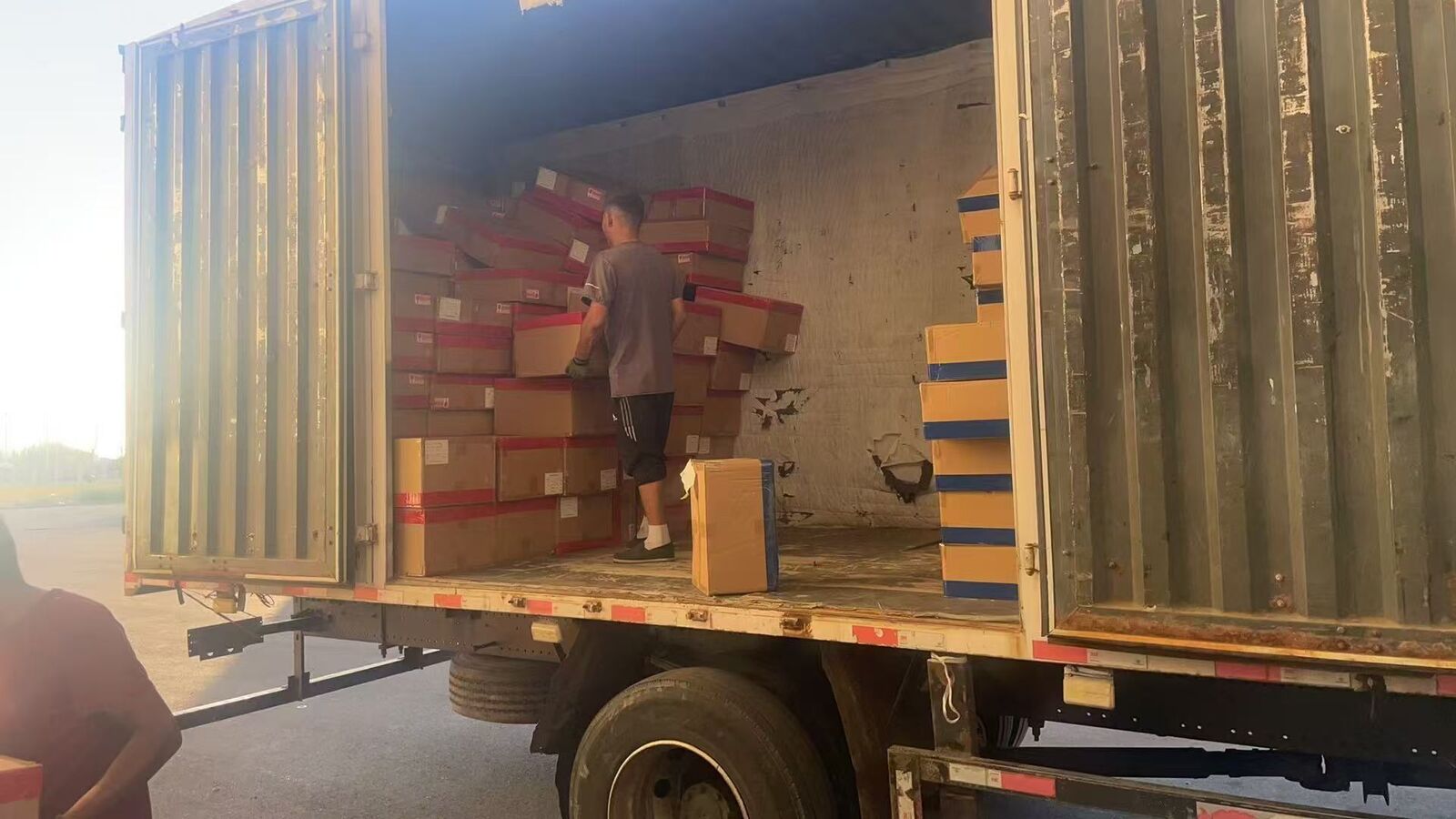
The vehicle is a curtain-side trailer, not a container. The load space is a fixed box, and two ceilings sit on it: 96 CBM and 25 tonnes. Whichever fills first is the real limit. Dense cargo — building materials, machinery — reaches the weight limit early. Flat-pack furniture and textiles reach the volume limit while there is still payload left.
The practical consequence: count trailers in cubic metres. Once you measure the cartons instead of the finished product, plenty of cargo quoted as "20 tonnes" turns out to need two trailers of space and one trailer of weight. The same 96 CBM applies to the direct truck and to the transshipment truck; we publish one ceiling, not two.
What flat packing changes
Flat packing removes air, and it removes cushioning with it. Edges and corners of panels and cabinet doors are the first thing to suffer during loading and again at a transload point. Three cheap measures cut that risk: foam or card corner protectors, double-wall cartons for large panels, and one standard carton footprint so the load stacks without dead space.
Declare volume from the outside carton dimensions, not the product dimensions. On a large order that difference is several cubic metres — and several cubic metres is the difference between one trailer and two.
Loading: standing up or lying flat
Flat packs can be stood on edge, provided they are tied to the trailer wall or to the lashing points. A curtain-side trailer has no container's rigid walls, so strapping and load securing are part of the job, not an extra. Lashing and reinforcement are not included in our freight; they are charged separately. If your supplier does the securing, agree the lashing plan with us before loading.
In a mixed load, heavy goes low and light goes high, and each unit is secured on its own. For tall bulk loads, keep a safe gap to the curtain: the curtain flexes and cargo must not lean on it.
Moisture: a curtain sider is not a container
A curtain-side trailer is not the sealed, unventilated steel box a container is, and across four countries the temperature and humidity swing. For MDF, board and fabric that means a real risk of warping and trapped smell. Practical advice: a waterproof inner liner, a pallet or wooden floor dunnage so the cargo is off the deck, and desiccant bags for sensitive loads. These are packaging recommendations, not a promise about the outcome.
LCL or a full trailer
Furniture loads often land between 5 and 30 CBM and do not need a whole trailer. LCL starts at 1 CBM or 100 kg. In a consolidated load the loading sequence matters: cargo that clears first must stay reachable, and a bulky block must not wall off everything behind it. Once your volume approaches 96 CBM, a full trailer is simpler and cheaper than LCL.
Which gateway, which customs post
Two lines are live. The Wuqia line runs Xinjiang – Kyrgyzstan – Uzbekistan – Turkmenistan and enters Iran at Sarakhs; the Khorgos line starts through Kazakhstan and then follows the same Uzbek and Turkmen legs. The 0.4% transit tax applies only on the Wuqia line: it is a tax, not freight, it is not in our quote, and the Khorgos line does not carry it.
Transit time on the Wuqia line is counted from the Wuqia border, not from the Chinese hub, and excludes Iran customs clearance. Currently a direct truck takes 21–23 days to Tehran Customs and 18–21 days to Mashhad Customs; a transshipment truck takes 26–30 and 24–28 days. The Khorgos line carries no published day count — it is quoted in writing. The Chinese hub to the Wuqia border is normally about 7 days, counted separately. These are current ranges, not guarantees.
Sellable destinations are Mashhad Customs or Tehran West Customs; in Tehran that means Gomrok Gharb, Shahriyar or Aprin Dry Port. Sarakhs is the entry gateway into Iran and is not a sellable destination. Delivery is hub-to-customs on CPT / DAP terms: no door-to-door, no DDP, and Iran clearance sits with the consignee's licensed broker.
What to send with an enquiry
Six items: origin hub (Yiwu, Shenzhen Pinghu, Guangzhou Baiyun, Shanghai or the border supervised zone), destination customs post, cargo name with HS code, gross weight in kg, volume in CBM, and the number of packages with carton dimensions. With those six we issue a written rate with a validity date. Freight is not published on this page.
One boundary worth knowing: furniture and home goods carrying a logo or a brand name on the carton or the product count as branded cargo, and the paperwork is reviewed first. A paperwork review is not an acceptance to carry.
FAQ
How much flat-pack furniture fits on one trailer?
The ceiling is 96 CBM and 25 tonnes per trailer. Light, bulky cargo normally uses up the cubic metres first, not the tonnes.
Can 15 CBM of furniture go as LCL?
Yes. LCL starts at 1 CBM or 100 kg; you do not have to book a full trailer.
Is delivery to Mashhad Customs or Tehran West?
Both are sellable destinations. Sarakhs is Iran's entry gateway, not a sellable destination, so name the customs post in your enquiry.
Do you clear customs and deliver to the door?
No. It is hub-to-customs on CPT / DAP terms; Iran clearance is done by the consignee's licensed broker, and we do not offer door-to-door or DDP.
Related: LCL to Tehran Customs · Full trailer or LCL · Mashhad Customs or Tehran West