Vehicles
Vehicle-Carrier Trucks: Types, Pooling Rules & Loading Safety
The vehicle-carrier (frame/cage) trailer is one of the three ways to move complete vehicles export — the same overland TIR corridor, on a flatbed-type trailer. This article covers the operating details of that method: which truck types are compliant, how many units fit, how pooling works, and how loading is protected.
- Three compliant truck types: flat-head articulated (≤17.1m, 6 standard), long-head articulated (≤18.1m, 7 standard), mid-axle carrier (≤22m, mainstream on this corridor, 8 standard)
- Same overland TIR corridor; counted from the Wuqia border crossing, direct trucks currently run 21-23 days to the Tehran West Customs bonded warehouse
- A pooled trailer (multiple customers) only drops at Mashhad or Tehran by default; one customer filling all 8 slots can pay a surcharge for direct delivery elsewhere
- Export license is the core document; vehicle data (brand, model, VIN, engine number, weight, dimensions) is also required
- Carrier and vehicle-carrier insurance are included in the freight rate; cargo insurance is separate, per Incoterms
Three truck types, three capacities
| Truck type | Overall length | Standard load | Max with compact vehicles |
|---|---|---|---|
| Flat-head articulated | ≤ 17.1 m | 6 units | 7 units |
| Long-head articulated | ≤ 18.1 m | 7 units | — |
| Mid-axle carrier (mainstream on this corridor) | ≤ 22 m | 8 units | 9 units |
All three types are limited to ≤2.55m width and ≤4m height. Actual capacity depends on each vehicle's size: compact cars and small SUVs (length ≤4.5m) typically reach the full 8-unit count; mid-to-large SUVs and large MPVs (length 4.7-5m and up) usually cap the load at 6; a mixed load of compact cars and mid-size SUVs commonly runs 7.
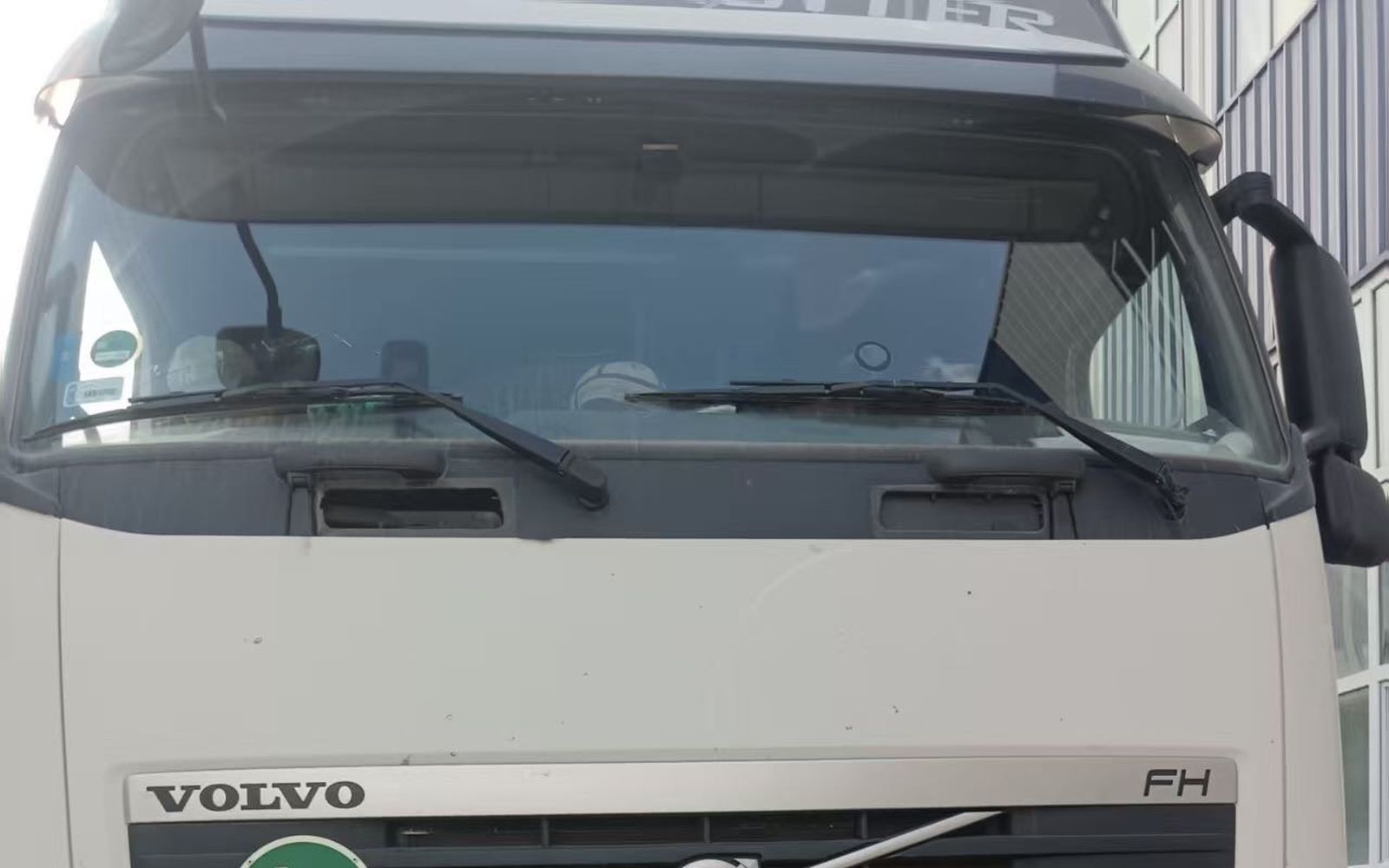
Pooling rules: when it's Mashhad/Tehran only, and when direct delivery costs extra
When a trailer is pooled across multiple customers, there are only two fixed drop points: Mashhad (the first major city after the Sarakhs crossing) or Tehran. Other cities — Isfahan, Tabriz, Bandar Abbas, Karaj — require the customer to arrange local onward transport from the drop point.
If one customer books all 8 slots, it counts as a dedicated full load and can be delivered directly to another specified location in Iran for a surcharge (typically 10-30% over the base rate, distance-dependent). If a shipment isn't enough to fill a trailer, it waits to be pooled first — typically 3-7 days, up to 14 in peak season.
Loading and lashing protection
Before loading: fuel tank left at about a quarter, battery negative terminal disconnected (or doors simply locked for new vehicles), parked in gear with the handbrake engaged, mirrors folded and antennas retracted, interior cleared and photographed for the record.
Lashing: a wheel chock in front and behind each tire, rubber-sleeved ratchet straps in an X pattern through the wheel hub or chassis anchor points (unsleeved straps can scuff the hub), ≥20cm spacing between adjacent vehicles (add foam/EPE padding if tighter), full car covers on premium vehicles or at minimum protective wraps on door handles, mirrors, and front bumper corners on standard vehicles, and a check that the exhaust and spare-tire mount underneath aren't loose.
In transit: full tarp cover secured at all four corners, sun protection, speed control throughout — especially over speed bumps and at border transload points — with periodic re-checks of straps and chocks at every stop.
The two most common costly mistakes: straps without a rubber sleeve scuffing the wheel hub, and a loose tarp corner flapping at speed and scratching the paint. Keys and paperwork should travel separately from the vehicle, not inside it.
Damage liability and handover sign-off
In-transit damage caused by inadequate lashing, shifted wheel chocks, or a loose tarp is the carrier's liability, compensated at full CIF value plus return/re-shipment costs. Pre-existing damage not disclosed by the customer (existing scratches, abnormal fuel level, etc.) or missing accessories are the customer's responsibility. Force-majeure losses are settled per the insurance terms.
Handover sign-off at loading includes: before/after exterior photos (4 angles plus 4 wheel hubs and the VIN plate), fuel-gauge reading, odometer reading, an accessories checklist, lashing-point photos (4 straps plus 4 chocks), tarp-coverage photos, and a signature from both sides.
Documents and insurance
An export license is the core document — without it, customs clearance cannot start. Vehicle data needed: brand, model, VIN, engine number, curb weight, dimensions. Clearance follows the same pattern as general cargo — goods are handed off at the bonded customs warehouse; Iran-side clearance and duties are handled by the buyer's licensed customs broker. We do not handle Iran customs clearance.
Carrier liability and vehicle-carrier insurance are included in the freight rate. Cargo (vehicle) insurance is separate by default and follows Incoterms: FCA/FOB puts it on the buyer, CIF/CIP on the seller. We can arrange it on request, itemized or billed at cost.
What to send for a vehicle-carrier quote
- Brand + model + trim for each vehicle
- Dimensions (L×W×H, mm) and curb weight (kg) per vehicle
- Quantity, fuel type (petrol/EV/hybrid), export-license status, and destination (Mashhad or Tehran by default; other locations require a full-trailer booking)
Rates aren't published online. Send the three items above with your planned shipping date for a quote.
sales@chinairantrucks.com · WhatsApp +86 132 3740 1856
FAQ
How many vehicles fit on a vehicle-carrier trailer?
The mid-axle carrier is the mainstream type on this corridor, up to 22m overall length, standard load 8 compact units (up to 9 with smaller vehicles, still within the 22m limit). The flat-head articulated unit (up to 17.1m) takes 6 standard, up to 7 with compact vehicles; the long-head articulated unit (up to 18.1m) takes 7 standard, up to 8.
Does a pooled vehicle-carrier only go to Mashhad or Tehran?
Yes. When a trailer is pooled across multiple customers, there are only two default drop points: Mashhad or Tehran. Other cities require the customer to arrange local onward transport from the drop point. If one customer books all 8 slots, direct delivery to another specified location in Iran is possible for a surcharge.
How long does vehicle-carrier transport take?
Same overland TIR corridor: counted from the Wuqia border crossing, direct trucks currently run 21-23 days to the Tehran West Customs bonded warehouse. If a shipment isn't enough to fill a trailer, it waits to be pooled first — typically 3-7 days, up to 14 in peak season.
What documents does vehicle-carrier export need?
An export license is the core document — without it, customs clearance cannot start. Vehicle data is also needed: brand, model, VIN, engine number, curb weight, and dimensions.
Is vehicle insurance included in the freight rate?
Carrier liability and vehicle-carrier insurance are included in the freight rate. Cargo (vehicle) insurance is separate by default and follows Incoterms; we can arrange it on request, itemized on the quote.
Who is liable for loading damage?
In-transit damage caused by inadequate lashing, shifted wheel chocks, or a loose tarp is the carrier's liability, compensated at full CIF value plus return/re-shipment costs. Pre-existing damage not disclosed by the customer, or missing accessories, are the customer's responsibility.
Related: Exporting complete vehicles and EVs · China–Iran TIR documents: CMR, carnet, packing list · CPT/DAP to Tehran West Customs vs DDP · The three inputs a quote needs: HS, weight, CBM