CARRIER & TRACKING
Who drives your trailer through Central Asia, and what you can verify
One tractor from a Chinese hub all the way to Tehran Customs is not how a four-country road corridor works. On the Central Asia legs the tractor and driver may be a partner carrier registered in the transit country. That is normal, and it is not the question worth asking. The questions worth asking are: who is the carrier of record, when is the seal opened, and what record of the cargo's position exists.
- Central Asia legs may run with a vetted partner carrier's tractor and driver
- Direct truck: one transload at Bukhara; transshipment truck: Osh, then Bukhara
- Beidou + GPS hourly position logs; electronic door seal
- CMR transit cover up to USD 250,000 per trailer load
Where the tractor can change — and why
The Wuqia line runs Xinjiang – Kyrgyzstan – Uzbekistan – Turkmenistan – Sarakhs in Iran, then to Mashhad Customs or Tehran West Customs. The Khorgos line starts through Kazakhstan and then follows the same Uzbek and Turkmen legs. Four border crossings mean four sets of plates, driver visas and local dispatch practice. A change of tractor is part of the corridor's structure, not a last-minute substitution.
Our trailers, their tractors
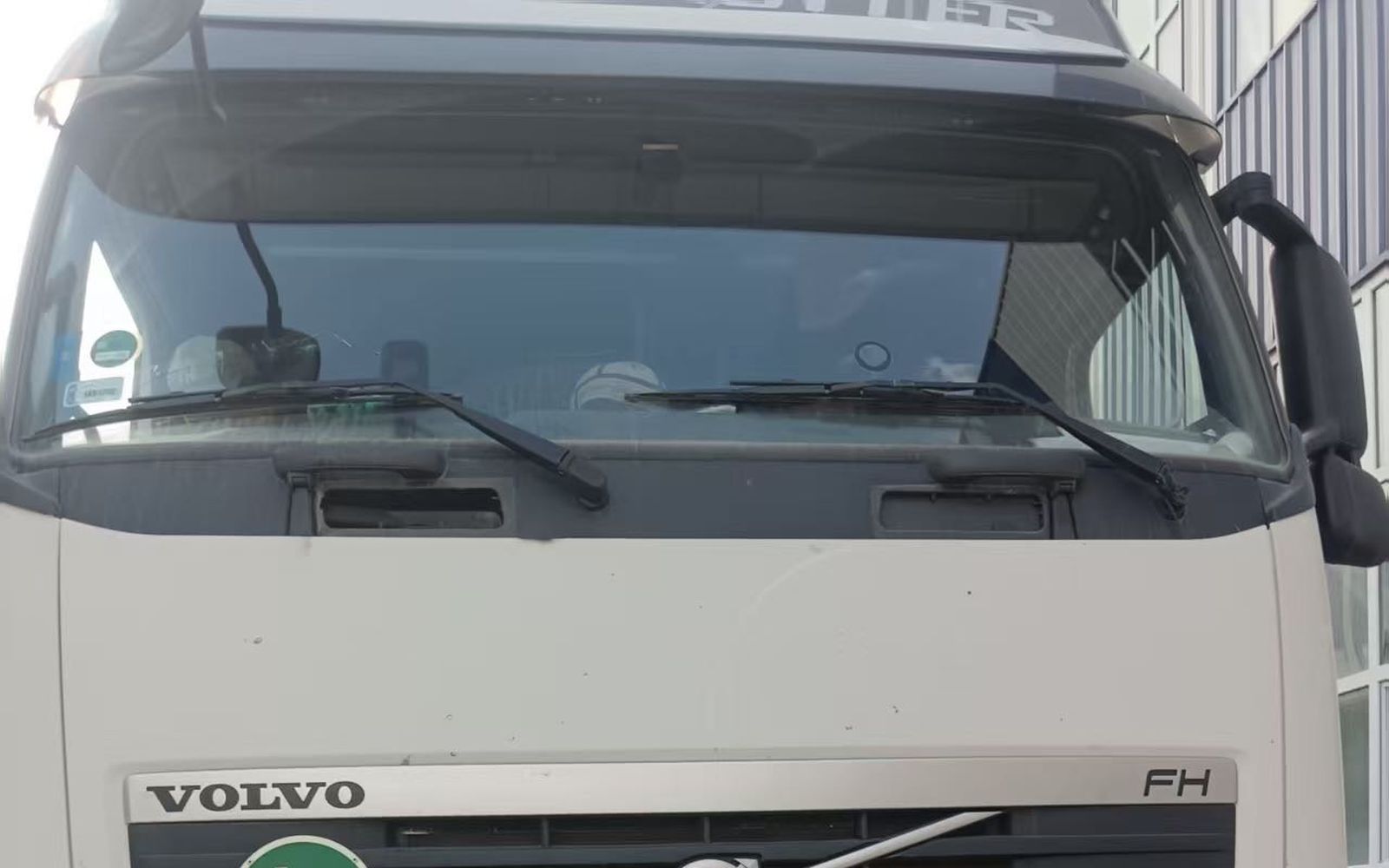
The fleet is 45+ owned and contracted curtainsider trailers, 480–540 HP, 13.6 m, plus 17.5 m step-frame low-beds for out-of-gauge cargo. On the transit legs the tractor and driver may come from a vetted partner carrier registered in that transit country, because transit plates, driver visas and local dispatch decide who can run that stretch reliably.
Which is why "one truck, one driver, no change from origin to destination" is not an accurate description of a route that crosses four countries. The useful measures are how many transloads happen, how the seal is handled, and who carries the liability.
What TIR does when the tractor changes
TIR is a customs seal applied at origin plus one carnet. It reduces the number of unsealings and transloads along the way; it does not reduce them to zero. This corridor runs on a China-side carnet held by the carrier as the TIR operator, so Iranian carnet shortages and price rises do not affect document supply on this line — that covers carnet supply only, not shared road conditions such as border congestion or driver visas.
Where a transload is required, the seal is opened and re-applied under the TIR procedure. A direct truck transloads once, at Bukhara. A transshipment truck transloads at Osh and again at Bukhara. TIR changes neither the transit time nor the freight rate.
Position data and the door seal: what exists, what is promised
Trailers carry Beidou-3 and GPS dual-mode positioning with hourly position logs, and the doors have an electronic seal that records open and close events. Those records are used by dispatch at the exit gateway and in Tehran. To be precise about the limit: we do not offer a promise of a live customer tracking dashboard. Ask at enquiry what a specific shipment can provide, and treat the written answer as the commitment.
If cargo is damaged, who answers
Cover is CMR transit insurance, liability up to USD 250,000 per trailer load. It covers loss and damage in transit; it does not mean a payout equal to your cargo value. For high-value cargo, arrange additional cover — shipper and consignee can both extend it, and the premium sits with whoever buys it. Claims follow the CMR procedure, so ask before the contract whose name the policy is in and how a claim is notified.
FAQ
Does the tractor and driver change in Central Asia?
It can. On the Central Asia legs the tractor and driver may be a vetted partner carrier registered in the transit country. The transload point is Bukhara; a transshipment truck also transloads at Osh.
What happens to the seal when the tractor changes?
Where a transload is required, the seal is opened and re-applied under the TIR procedure. TIR reduces unsealing and transloading; it does not remove them.
Can I watch the truck live?
The trailer carries Beidou and GPS with hourly position logs and an electronic door seal. We do not promise a live customer dashboard; what a specific shipment can provide is confirmed in writing at enquiry.
How much does insurance pay?
CMR transit cover is up to USD 250,000 per trailer load. For high-value cargo, add your own cover; shipper and consignee can both extend.
Related: The Bukhara transload · How TIR works on this corridor · Central Asia transit