CARGO: TOOLS
Tools and hardware to Iran: weight, batteries and brands before loading
A tools shipment on this corridor has a recognisable shape: many small cartons from several suppliers, a few heavy pallets of steel tools, and a batch of cordless tools with the battery sitting inside the housing. Three things decide the load at the outset — weight, battery status, and brand. This page deals with those three so that loading day holds no surprises.
- Ceiling per truck: 22 tonnes and 80 CBM, whichever comes first
- Steel tools usually fill the trailer by weight, not by volume
- Cordless tools: UN3481 lithium battery and a full 16-section safety data sheet
- Full trailers only — hub to customs, CPT / DAP
Two cargo families, two behaviours
Tools are not one commodity. The first family is hand tools and steel: pliers, spanners, screwdrivers, socket sets, clamps, hand presses, blades and bits. That is steel, and its density sits well above the 275 kg per cubic metre line — the trailer still looks half empty when the load is finished by weight.
The second family is power and cordless tools: drills, grinders, saws, garden tools and similar battery units. Here volume climbs faster, because every machine brings its own box and boxes leave a lot of air. A mixed shipment of a few steel pallets plus dozens of power-tool cartons approaches both ceilings at once, and both numbers deserve to be worked out separately.
Weight: the figure has to be weighed
Gross weight, not net: goods, cartons, pallets and any wooden crate on top. On a load that was already close to the ceiling, the weight of pallets and crates is the difference between fitting and not fitting. If the declared net weight is close to 22 tonnes, weigh pallets and crates at the supplier before loading — not at the border weighbridge.
The battery is the one part of this cargo that is not simple
A cordless tool with the battery fitted falls under UN3481; a battery packed on its own falls under UN3480. Both need a complete 16-section safety data sheet and UN packaging certification before any agreement. Sending the papers is not acceptance of carriage; every battery consignment is reviewed on its own.
One practical point: state in the packing list whether the battery sits inside the tool or is packed separately, how many cells it holds and the capacity of each pack. Tools shipped without a battery are ordinary general cargo and do not take that documentation route.
Brand: review before loading, not after
A large share of Chinese tools is sold under a trade name. Cargo carrying a brand name or logo on the product or the carton is reviewed before any agreement; we do not opine on authenticity or selling rights, we ask for the documents. Unbranded goods in plain cartons skip that step, but they carry the same weight and the same battery question.
Packing and lashing: a curtain-side trailer has no steel wall
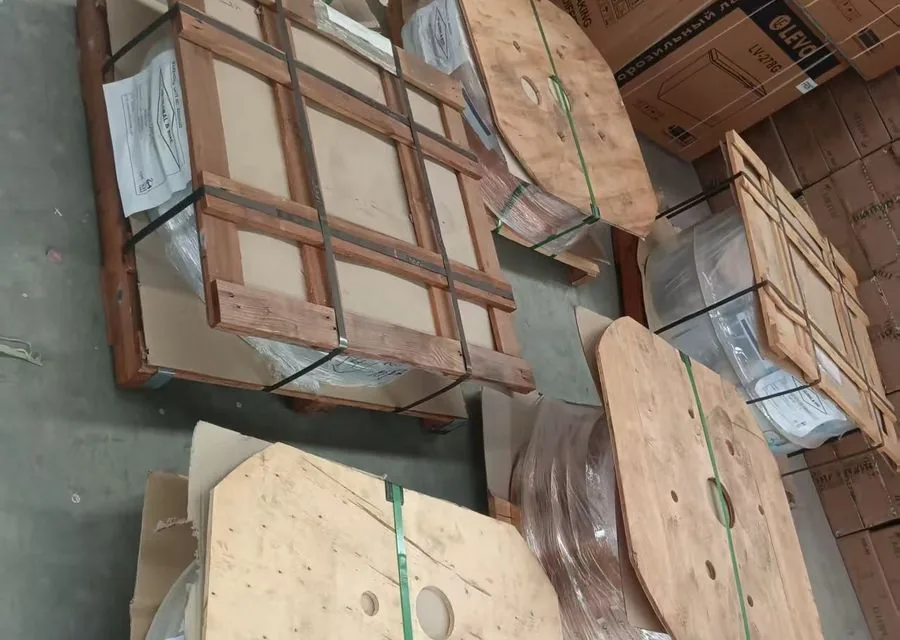
Steel tools are heavy, and heavy means it slides. A curtain-side trailer has no steel wall for the load to lean on, so lashing is part of the job rather than a formality. A 1.2-tonne pallet of steel that shifts half a metre is not a cosmetic problem. If the supplier lashes the load itself, agree the lashing plan with us before loading starts. Lashing, reinforcement and any crane lift are billed separately from the freight.
Keep the marks and numbers on wooden crates aligned with the packing list. On a load consolidated from several suppliers, those marks are the only way to identify a carton at destination.
Several suppliers, one trailer
Tools usually arrive from more than one place. Consolidation happens at the origin hub and the load leaves on one truck. This line is full-trailer only: we do not sell space in a shared trailer, and a truck running part-loaded is still one full truck. If your cargo is smaller than a trailer, the decision to wait for more cargo or to move at that volume is yours; the unit of carriage is the same either way.
Route, entry point and current transit time
There are two exits: Wuqia, through Kyrgyzstan, Uzbekistan and Turkmenistan; and Khorgos, through Kazakhstan, Uzbekistan and Turkmenistan. On the Iranian side, Sarakhs and Lotfabad are entry points — not destinations and not places of clearance. The sellable destinations are Mashhad customs or West Tehran customs, and Iranian clearance is handled by the buyer's licensed broker, not by us.
Wuqia transit time is counted from the Wuqia border and excludes Iranian clearance. Currently a direct truck takes 21–23 days to Tehran customs and 18–21 days to Mashhad customs; a transshipment truck takes 26–30 and 24–28 days. The run from the China hub to the Wuqia border is about 7 days and is counted separately. The Khorgos line has no published day figure; it is given in the written quote. These are current ranges, not a commitment.
What to send for a quote
Six things: origin hub, destination customs, goods description with HS code, gross weight in kilograms, volume in CBM, and package count with outer dimensions. For cordless tools add one more line — battery status. With that list a written rate is issued with a validity date. Freight is not on this page.
Frequent questions
Do you carry tools without a battery?
Yes — tools without a battery are general cargo. Just state the battery status in the enquiry so the documentation route is clear; a battery-fitted tool and a separately packed battery each need their own papers.
Is there a minimum load for one truck?
There is no minimum for sharing a trailer; this line is full-trailer only. A truck that leaves part-loaded still counts as one full truck.
How long do power tools take to Tehran?
Currently a direct truck from the Wuqia border takes 21–23 days to West Tehran customs and 18–21 days to Mashhad customs; a transshipment truck takes 26–30 and 24–28 days. The run to the Wuqia border is about 7 days and counted separately.
Do you clear customs in Iran?
No. Delivery is at the destination customs, CPT / DAP, and clearance is done by the buyer's licensed broker. We do not clear Iranian customs and we do not deliver to the buyer's warehouse door.
Related: Lithium batteries on the same line · The 22-tonne and 80 CBM ceilings · CBM and capacity calculator